
CT Diagnostics in 2025: An Era of Precision and Intelligence
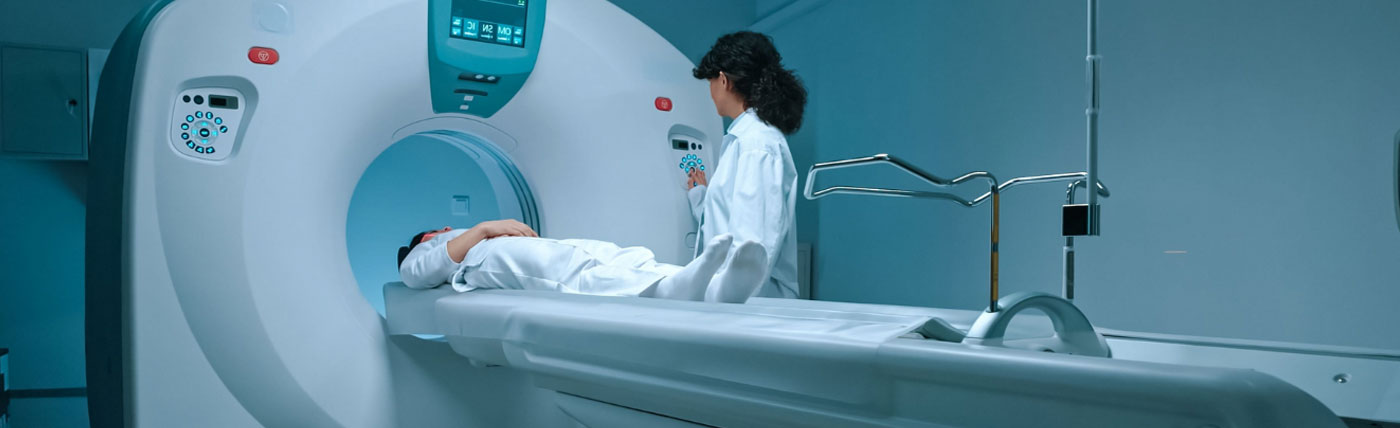
Computed Tomography (CT) is undergoing a major technological revolution in 2025, moving far beyond its traditional role as an anatomical imaging modality. The current landscape is defined by the clinical introduction of next-generation detector technology, the pervasive integration of Artificial Intelligence (AI), and a concerted focus on dose reduction without sacrificing image quality. These advancements are transforming CT into a powerful tool for personalised, data-rich diagnosis and treatment planning.
1. The Detector Revolution: Photon-Counting CT (PCCT)
The single most disruptive hardware innovation in CT is the clinical adoption of Photon-Counting CT (PCCT). This technology fundamentally changes how X-ray data is captured, leading to superior image quality and a wealth of new diagnostic information.
Superior Resolution and Low Dose: Unlike traditional CT detectors, which measure the total energy of X-rays, PCCT counts each individual photon and measures its specific energy. This allows for significantly improved spatial resolution (the detection of smaller structures) and reduced image noise, often with a lower radiation dose to the patient.
Spectral/Multi-Energy Imaging: By categorising X-ray photons by energy, PCCT enables routine spectral imaging. This is a game-changer because it allows radiologists to perform material decomposition—meaning they can automatically differentiate and quantify chemical elements (such as iodine contrast, calcium, water, and fat) in a single scan. This provides much richer diagnostic information for characterising tumours, plaques, and stones, without needing separate dual-energy scans.
Clinical Applications: PCCT is rapidly gaining traction in specialities like cardiology (better characterisation of coronary plaques), oncology (enhanced tumour detection and characterisation), and musculoskeletal imaging.
2. Artificial Intelligence: The Essential Diagnostic Partner
Artificial Intelligence is no longer just a research curiosity; in 2025, it is integrated into nearly every phase of the CT workflow, from patient setup to final report.
AI-Enhanced Image Reconstruction (DLR): Deep Learning Reconstruction (DLR) algorithms are replacing or augmenting traditional iterative reconstruction methods. These AI models are trained to remove image noise and artefacts, enabling ultra-low-dose CT scans while maintaining diagnostic image quality that rivals or even surpasses that of standard-dose imaging.
Automated Workflow and Personalisation: AI-driven tools are streamlining the scanning process:
- Patient Positioning: Using 3D cameras and deep learning, systems automatically position the patient and define the scan range, improving consistency and reducing setup time.
- Contrast Timing: AI automatically predicts the optimal, patient-specific contrast delay for CT angiography, ensuring peak vascular opacification on the first attempt.
- Radiomics and Prognosis: AI algorithms analyse not just the visible features of a tumour but hundreds of radiomic biomarkers within the scan data. This is being used in studies (like those for head and neck cancers) better to predict a patient’s treatment response and long-term prognosis, moving CT into the realm of precision medicine.
3. Advancements in Functional and Hybrid Imaging The trend is to glean more than just anatomical data from a single CT exam, often by pairing it with other modalities.
4D and Dynamic CT: Advances in scanner speed and software enable routine 4D imaging (3D plus time). This allows real-time visualisation of physiological processes, such as brain perfusion (blood flow) for acute stroke management, where faster acquisition and processing can significantly reduce time-to-treatment.
PET-Enabled Dual-Energy CT (Hybrid Imaging): Breakthroughs are integrating the functional data from a PET scan (which shows metabolic activity) with the anatomical and material-decomposition data of dual-energy CT. This fusion is achieved without requiring new hardware on some existing scanners, providing clinicians with unprecedented information about both the location and the composition of disease, such as in cancer and cardiovascular risk assessment.
4. Enhanced Accessibility and Portability
CT is becoming more accessible, extending its utility beyond the traditional hospital setting.
Point-of-Care and Portable CT: Compact, lightweight CT scanners are being developed for use in ambulances, emergency rooms, and remote clinics. These units bring advanced diagnostic capabilities directly to the patient’s bedside, enabling faster, more informed critical decision-making in trauma and acute care.
Teleradiology 2.0: Cloud-based, high-speed platforms are enabling teleradiology to handle the massive data load of modern CT, facilitating faster interpretation by specialists across different geographical locations. This improves diagnostic turnaround time and helps address global shortages of subspecialty radiologists.